The Time Variance Authority, or TVA, is an agency outside ordinary time. It used to destroy any timeline that diverged too far from the approved history. In Endgame, the Avengers visit 2012 and a version of Loki uses a blue cube called the Tesseract to escape capture. The TVA arrests him for creating a new branch. His effort to escape the agency exposes who built it and changes which worlds it allows to exist.
Jump to a part of this chapterScreen timeline
The escape creates a new path. The Loki of this series leaves the Avengers’ custody during their return to 2012 in Endgame. The TVA then intervenes in a life that has branched away from the Loki followed in the earlier films. Keeping those two versions in mind helps explain why the series can explore a new future for him. The Loki series on Disney+ begins with that arrest and its consequences.
Season 1 exposes the agency. Across the first season, Loki’s work with Mobius turns into an inquiry into the TVA itself. Sylvie’s history shows the human cost of erasing branches. Their meeting with He Who Remains brings the question of who controls those lives into the open. The six episodes are listed on Disney’s series page.
Season 2 follows the consequences. Loki begins slipping between moments in the TVA’s past and future while its staff confront the truth that they are variants. The effort to keep the agency functioning now has to account for the lives it once destroyed. Disney’s interview with executive producer Kevin Wright describes that shift. The official season 2 guide frames the story around free will and the expanding multiverse.
The final choice. Season 2, episode 6, “Glorious Purpose,” resolves Loki’s effort to keep the branches alive. His decision gives the earlier ruler’s promise of safety a personal cost and makes his relationship with Mobius and Sylvie central to the outcome. Watch Loki on Disney+ with a subscription for the full sequence. The chapter’s threat guide below explains pruning, the Void, and incursions.
Screen history
Loki
Tom Hiddleston
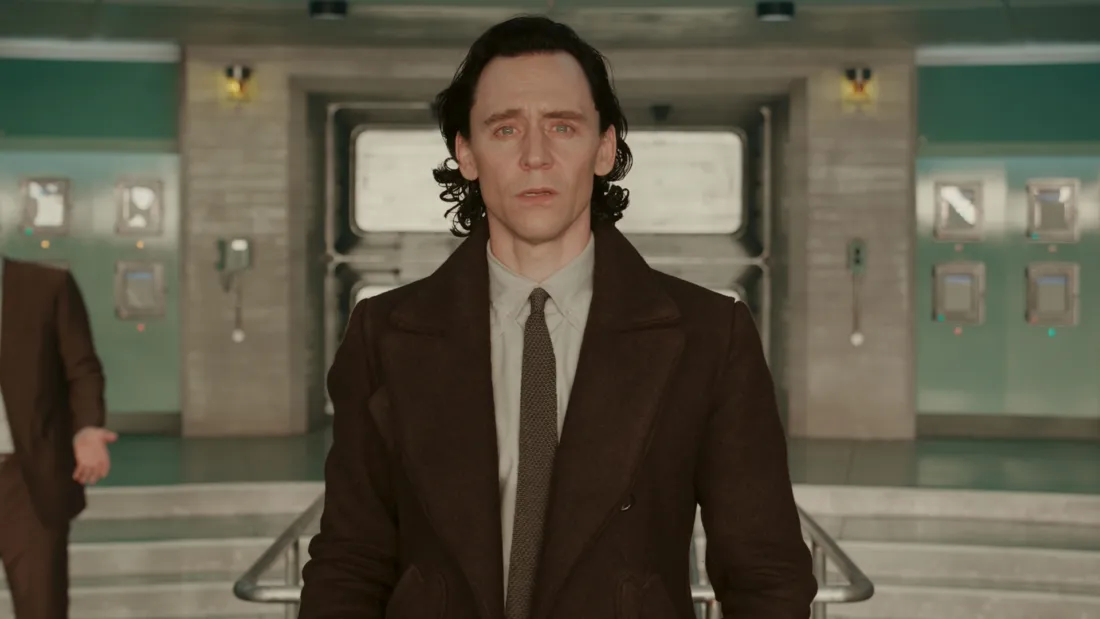
Loki grew up in Asgard as Thor’s adopted brother. The Loki who fought beside Thor near the end of his life was killed by Thanos. The series follows a version who escaped in 2012, at a point when he still wanted power and had just led an attack on Earth. Marvel calls versions of the same person from different realities variants.
At the TVA, Loki learns the agency’s founder, He Who Remains, destroyed timelines to keep other versions of himself from starting another war. When the machinery that controls the branches fails, Loki destroys it and uses his own power to keep the branches alive. He gives up a life beside his friends to make that possible.
Marvel Comics
Loki: Agent of Asgard starts with Loki working for Asgard in secret. The missions ask whether someone known for betrayal can change the story other people expect from him. The TV series asks a related question through his work with the Time Variance Authority.
Try Loki: Agent of Asgard (2014) #1–5 as the opening reading sequence. Marvel’s guide identifies these five issues and Al Ewing and Lee Garbett’s work. The reading guide is free to browse. Reading the issues through Marvel Unlimited requires a subscription.
Mobius is the TVA investigator who offers Loki a job instead of allowing him to be erased. He thinks a Loki can help track down another version of Loki, Sylvie, who has been attacking TVA teams. Working together makes Mobius question the agency’s story about who it protects.
He eventually learns that TVA employees once had lives of their own and were made to forget them. One of his own possible lives is a father selling personal watercraft. Disney’s account of Endgame: Encore puts Mobius back at the TVA monitoring what is happening to the different realities.
Marvel Comics
The Time Variance Authority was part of Marvel’s comics before the show. Marvel’s Time-Keepers reading list tracks stories about who oversees time and who gets to change it. The more recent TVA: For All Time, Always mixes comic timelines with characters and ideas familiar from the screen.
For the older time-war setting, Marvel’s Time-Keepers guide points to Avengers Forever (1998) #1 and #10. The first brings Avengers from different periods into a conflict between Kang and Immortus. The tenth raises the stakes across humanity’s timelines.
For a newer entry point, TVA (2024) #1–5 is collected as TVA: For All Time, Always. Peggy Carter, Gambit, and Ghost-Spider join a TVA that has begun to accept more variants, and the story introduces Miss Minutes to the comics. The publisher’s page confirms the cast, issue range, and purchase options. Its use of familiar screen ideas makes it a useful companion to the series.
Ouroboros, who goes by O.B., maintains the TVA’s technology and wrote its handbook. During the second season, he shows Loki and Mobius how the Temporal Loom works. It is a machine that turns branching time into a form the TVA can manage and has a built-in limit on which timelines can survive its failure.
O.B. and the inventor Victor Timely try to adapt the Loom to handle more branches. The attempts show Loki that the machinery was built with rules he cannot simply repair away. O.B. also appears in Disney’s account of the Encore scenes watching incursions unfold.
Casey is a TVA employee who handles records and equipment. Loki sees him keeping Infinity Stones, objects with immense power in their home universe, in a drawer. The scene helps show how differently things work inside the TVA.
When the agency falls apart in season two, Loki finds a man named Frank at Alcatraz, a version of Casey living a very different life. After the TVA changes course, Casey is among its personnel. Disney names him alongside Mobius and O.B. in the Encore footage.
Sylvie is a Loki from another timeline. The TVA took her when she was a child. She escaped and hid in disasters where her actions would have little effect on the surrounding timeline. She wants to stop the institution that took away her life.
She and Loki find He Who Remains, the man who has been running it. Sylvie kills him because she believes he should no longer control which lives get to exist. The branches multiply. Season two follows Loki’s attempt to preserve that freedom without letting all the growing timelines die.
He Who Remains says versions of himself found ways to travel between universes and fought over them. He ended that war and created the TVA to eliminate histories that might produce rivals. What the TVA called the Sacred Timeline was the history he chose to protect.
After Sylvie kills him, the group encounters Victor Timely, another version of the founder and an inventor living in the nineteenth century. The two show how a person’s circumstances can produce different versions of them.
The TVA used to prune unwanted branches, meaning it removed them from the living timelines. A place at the end of time called the Void received people and objects the TVA removed. In Loki, a creature called Alioth hunts people there. In Deadpool & Wolverine, the Void also holds survivors such as Gambit. The Void in this story is a place. Bob Reynolds’s power in Thunderbolts* also goes by the name Void.
Deadpool & Wolverine uses anchor being for someone whose death can cause their world to decay. A TVA official named Paradox tells Deadpool his world has lost that person, a version of Wolverine, and tries to destroy it early. An incursion is a different threat, a collision between universes that can destroy one or both. In Endgame: Encore, the agency sees multiple incursions at once.
 Marvel Studios